
About Insta360
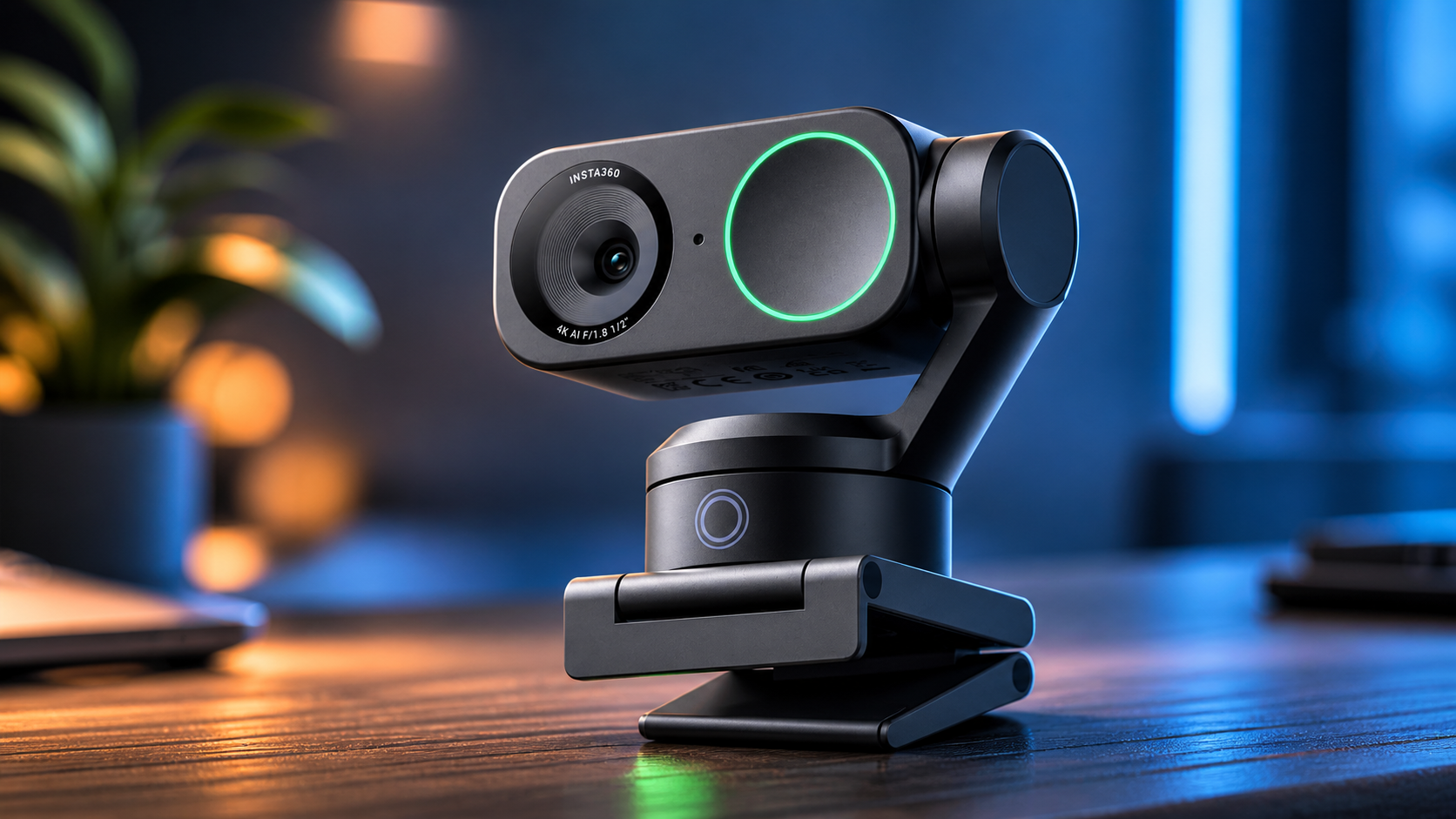
Insta360 didn’t enter the webcam space by accident. The company built its reputation around cameras that move, track, and adapt—first in action cameras, then in 360° systems. That experience shows clearly in its webcams.
Most webcam brands focus on resolution and small software tweaks. Insta360 approached the problem differently: how to make a webcam behave more like a real camera. That idea first appeared in the original Insta360 Link in 2022, which introduced a small mechanical gimbal that could follow the user automatically.
The Link 2 series doesn’t replace that idea. It breaks it into options.
What the Link 2 Line Actually Is
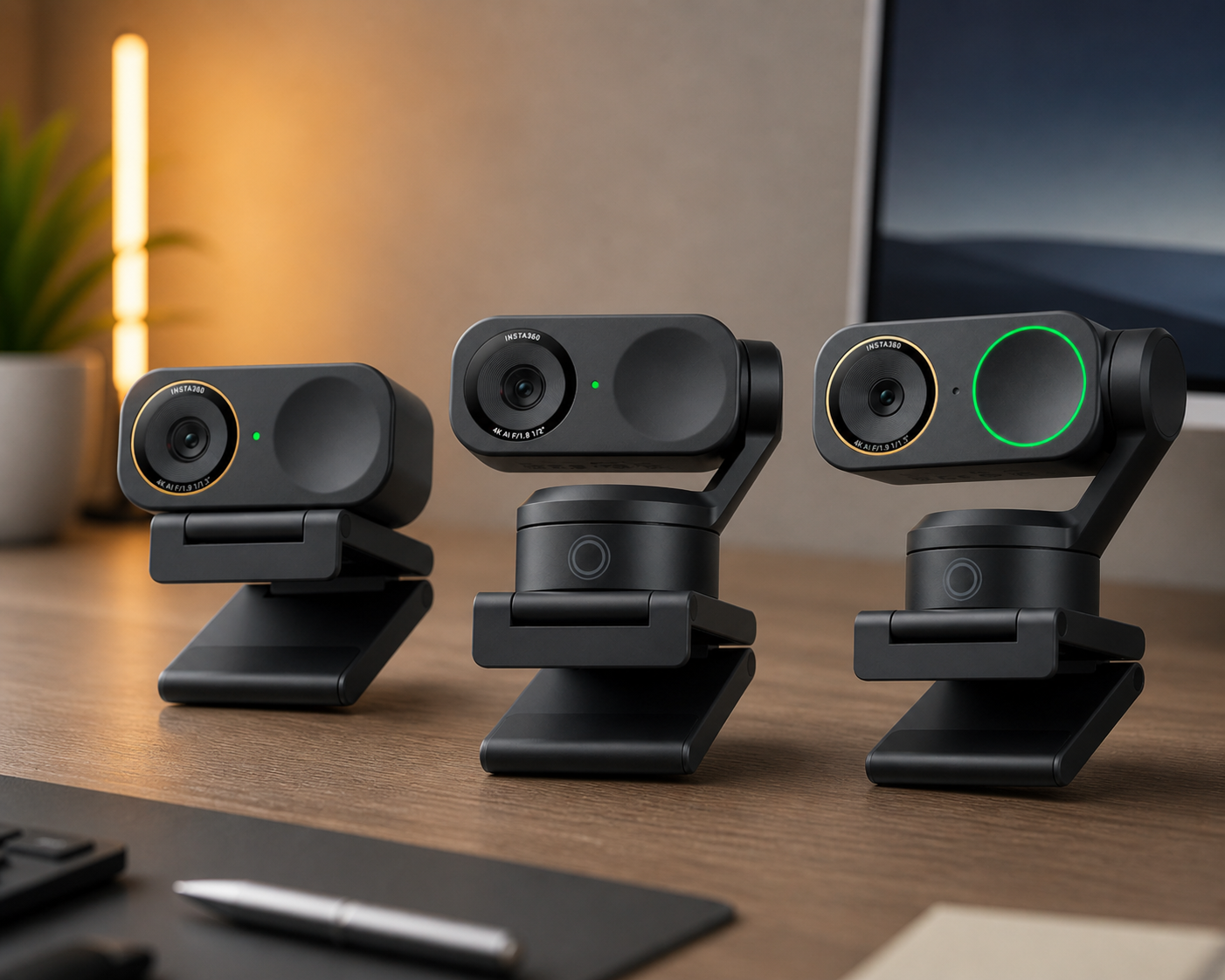
Instead of one upgrade, Insta360 split the concept into four models:
Insta360 Link 2
Insta360 Link 2 Pro
Insta360 Link 2C
Insta360 Link 2C Pro
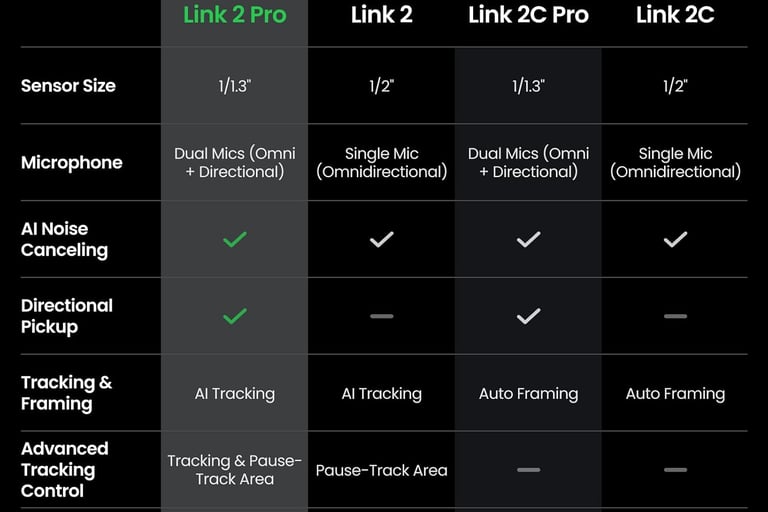
At first glance, they look almost identical. All shoot 4K. All support AI tracking, gesture control, HDR, and autofocus. But underneath, there are real hardware differences that affect how they behave.
To understand them, you need to look beyond resolution.
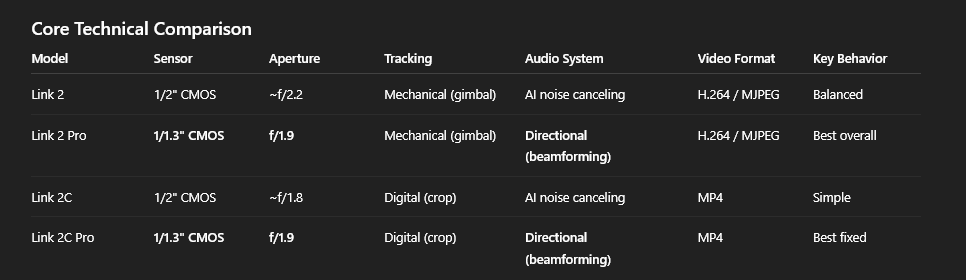
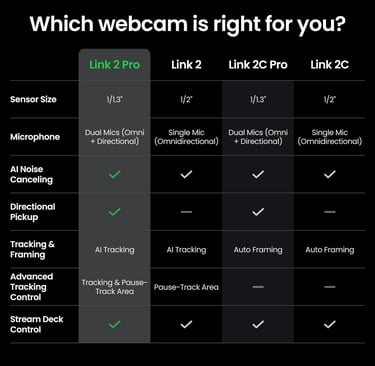
All four cameras capture 4K video (3840×2160 at 30fps) and use similar autofocus systems (PDAF), HDR processing, and software features. But the hardware differences above explain almost everything that matters in real use.
The Two Big Divides: Sensor and Tracking
The lineup splits cleanly in two ways.
First, by sensor size.
The standard models (Link 2 and 2C) use a 1/2" sensor, while both Pro models use a larger 1/1.3" sensor with a wider f/1.9 aperture. This is not just a spec sheet difference—it directly affects how the image looks.
A larger sensor collects more light, which results in:
cleaner shadows
less noise in darker environments
better dynamic range when light conditions are uneven
Second, by tracking method.
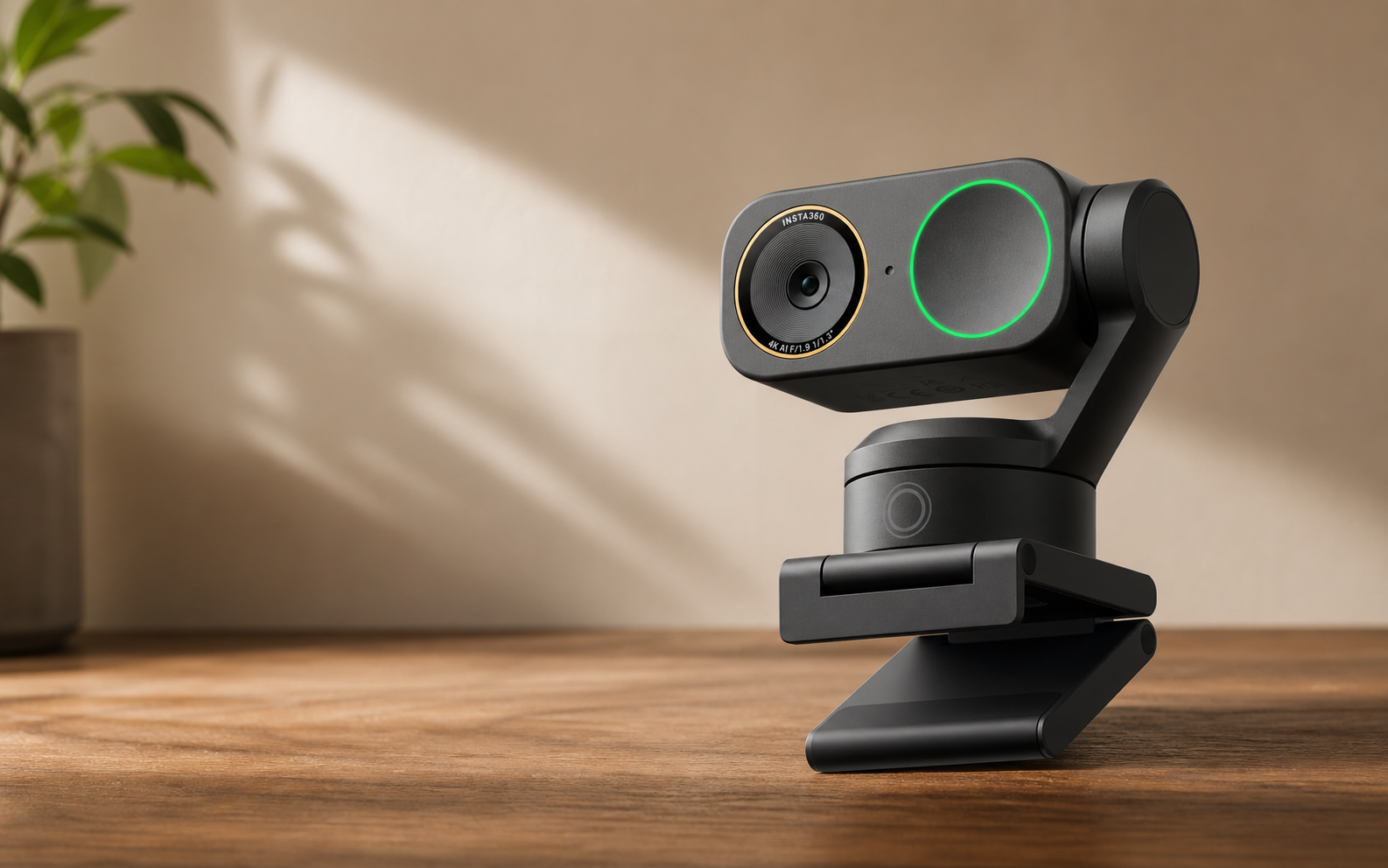
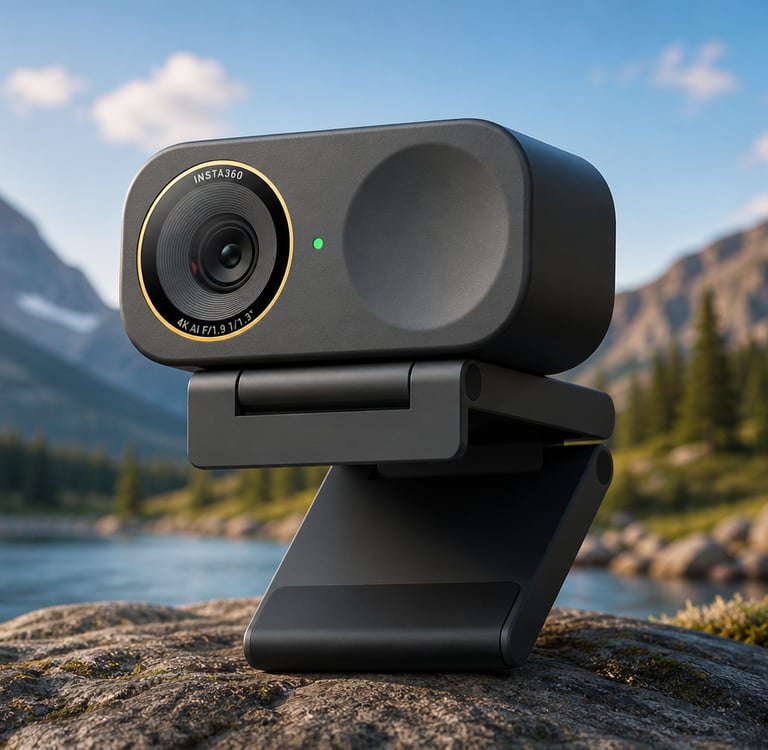
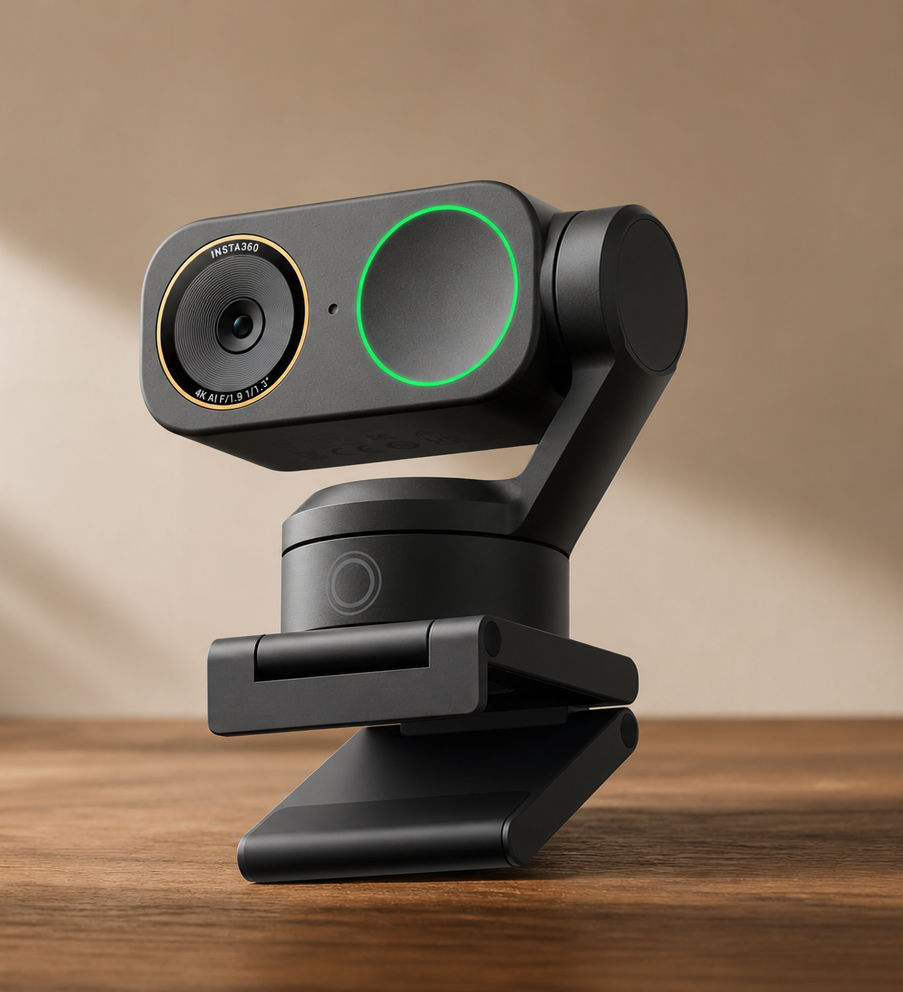
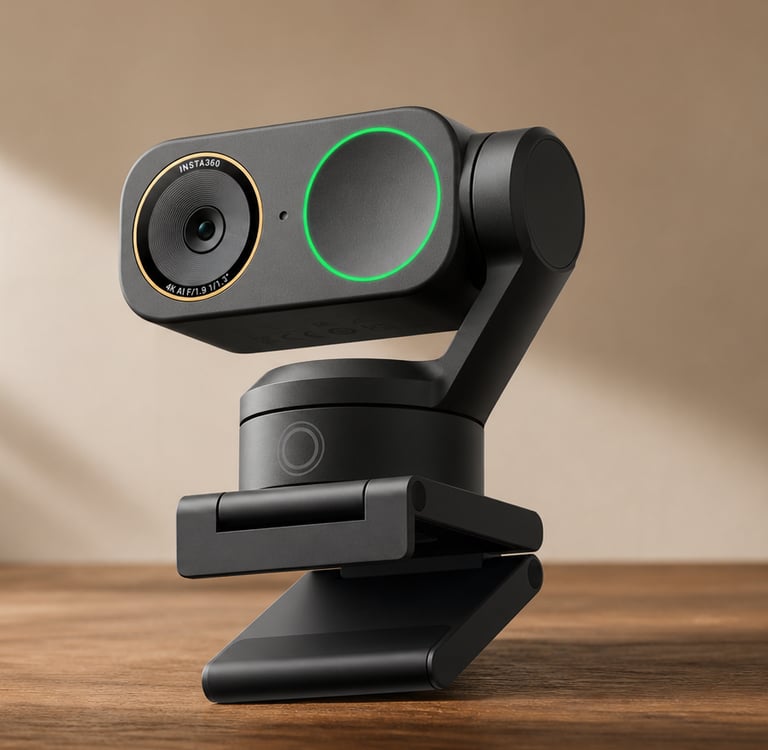
The Link 2 and Link 2 Pro use a mechanical gimbal. The camera physically pans and tilts to follow you. The 2C models don’t move at all. They simulate tracking by digitally cropping into the image.
That means:
Gimbal tracking → full 4K image is preserved
Digital tracking → image is cropped, reducing field of view and detail
This difference becomes obvious the moment you move.
A Closer Look at Image Quality
On paper, all four models shoot 4K. In practice, they don’t all look the same.
The two Pro models — Insta360 Link 2 Pro and Insta360 Link 2C Pro — share the same imaging hardware. Both use a 1/1.3" CMOS sensor and an f/1.9 aperture, and both support formats like H.264 with PCM audio (on the Pro line). That combination allows them to handle difficult lighting far better than the base models.
In a dim room, the difference is clear. The image from the Pro models holds detail in shadows instead of breaking into noise. Skin tones look more stable, and highlights are less likely to clip when there’s a bright background.
The standard models — Link 2 and 2C — are still sharp, especially in daylight. But once lighting becomes uneven, the smaller sensor reaches its limits faster.
What’s important here is that image quality between Link 2 Pro and 2C Pro is essentially the same. They share the same sensor and optical characteristics. The difference between them is not visual—it’s mechanical.
Audio and Why It Changes the Experience
Audio is often overlooked in webcams, but here it’s one of the clearest upgrades.
The standard models rely on AI-based noise reduction. It works reasonably well, but it still captures ambient sound. Keyboard noise, room echo, and background movement are still present.
The Pro models introduce beamforming directional microphones, which focus on the speaker. This isn’t just a spec—it changes how the camera sounds in real environments. Your voice becomes more isolated, and background noise drops noticeably.
If you’re not using an external microphone, this alone can justify the Pro models.
Model-by-Model Context
Insta360 Link 2
Insta360 Link 2 Price & Availability - https://amzn.to/46oo5YN
The Link 2 sits in the middle of the lineup and, for many people, stays there for a reason. It combines the mechanical tracking system with a reliable 1/2" sensor and solid HDR performance.
Its strength is balance. The gimbal ensures that tracking never reduces image quality, and autofocus keeps the image sharp without adjustment. It works well in normal lighting and doesn’t require much setup.
Its limitations are predictable. In lower light, noise becomes more visible, and the audio lacks the directionality of the Pro models.
Insta360 Link 2 Pro
Insta360 Link 2 Pro Price & Availability - https://amzn.to/3Sw59UG
The Pro model improves the areas where the standard model struggles. The larger 1/1.3" sensor and f/1.9 aperture allow it to handle more difficult lighting with less noise and better dynamic range.
At the same time, the directional microphone system improves voice clarity in real-world conditions. Combined with mechanical tracking, it becomes a more complete camera for streaming, presentations, or recording.
However, the difference is not constant. In a well-lit setup with an external microphone, the gap between this and the Link 2 becomes much smaller.
Insta360 Link 2C
Insta360 Link 2C Price & Availability - https://amzn.to/4y0Y8dV
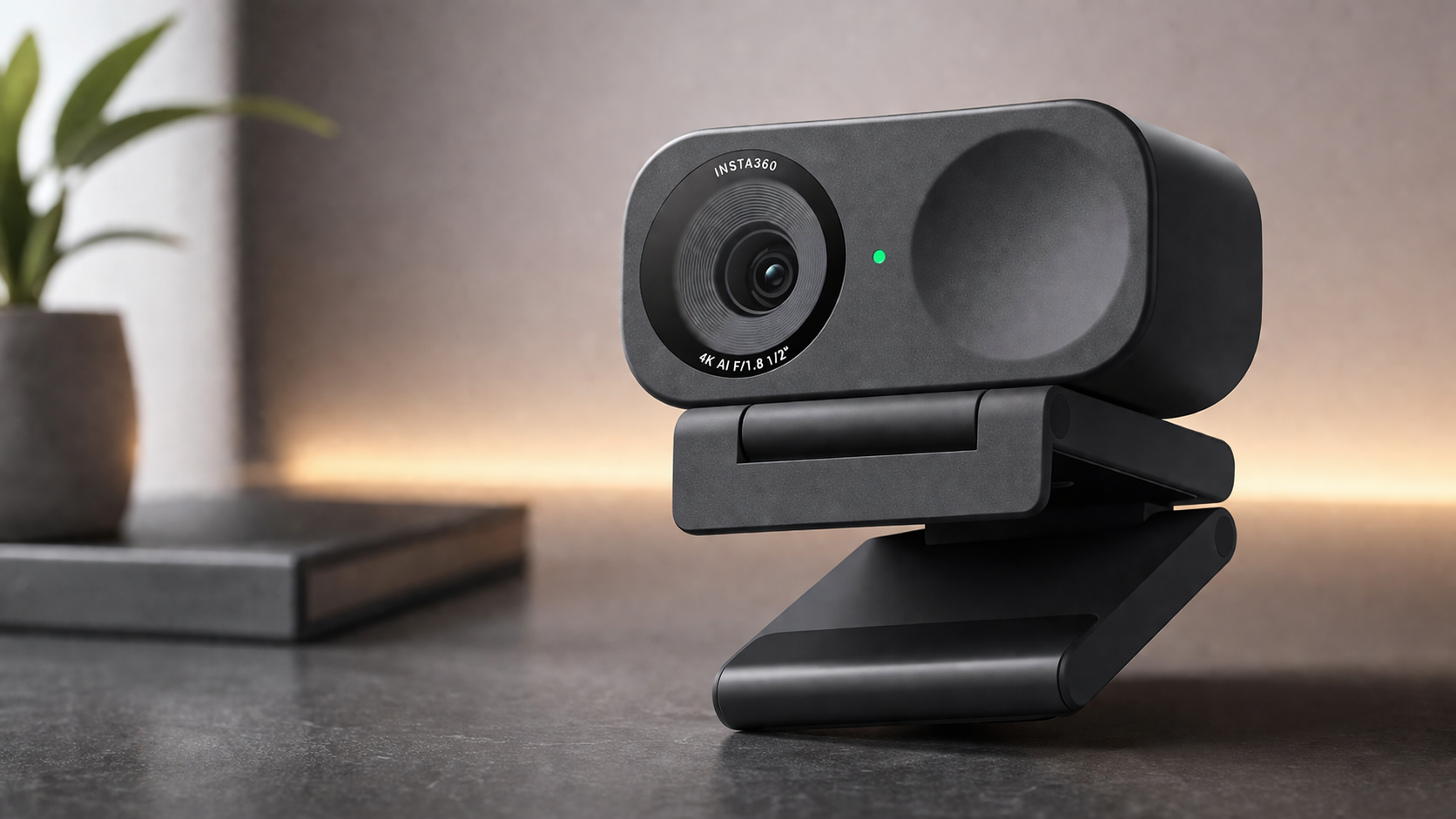
The 2C removes the gimbal and simplifies the design. It uses the same 1/2" sensor as the Link 2 and supports similar features, including HDR, autofocus, and AI framing.
The trade-off is clear: tracking is now digital. Instead of moving, the camera crops into the image. As a result, field of view narrows, and detail is slightly reduced when tracking is active.
In static setups, this is not a major issue. But as soon as movement is introduced, the difference becomes visible.
Insta360 Link 2C Pro
Insta360 Link 2C Pro Price & Availability - https://amzn.to/4xSojTL
The 2C Pro combines the best imaging hardware with the simplest design. It uses the same 1/1.3" sensor and directional microphones as the Pro model, which means its image and audio quality are effectively identical.
What it removes is the gimbal.
This creates a very specific product. You get top-tier image quality and audio, but without physical tracking. Instead, you rely on digital framing, which introduces cropping when you move.
For static use, this trade-off makes sense. For dynamic use, it becomes a limitation.
Direct Comparisons That Actually Matter
The most meaningful comparison is between Insta360 Link 2 Pro and Insta360 Link 2C Pro. They share the same sensor, the same aperture, and the same audio system. In terms of raw image quality, they are effectively equal.
The only real difference is tracking. One moves, the other crops.
That single difference defines the entire choice.
A similar pattern appears between Link 2 and 2C. Same base image, same core features, but one preserves the frame while the other sacrifices part of it when tracking.
Final Verdict
Once you remove the marketing, the lineup becomes straightforward.
If you need movement—presentations, standing desks, dynamic framing—the gimbal models (Link 2 or Pro) are clearly better. They maintain full image quality and feel more natural in use.
If you don’t move much, the equation shifts. The 2C models become more practical, and the 2C Pro stands out in particular because it delivers the same image quality as the Pro model without the added complexity.
The real mistake would be choosing based on 4K alone. All four cameras have it. What separates them is how they use that resolution—and what happens when you start moving.
"Where gadgets actually make sense." We're a team of tech enthusiasts tired of the hype. We review products based on real-world utility, not spec sheets.
voltger@outlook.com
© 2026. All rights reserved.